
Harsh Environments
MiniNODE: sealed, immersion-cooled computing for harsh environments
What is the MiniNODE?
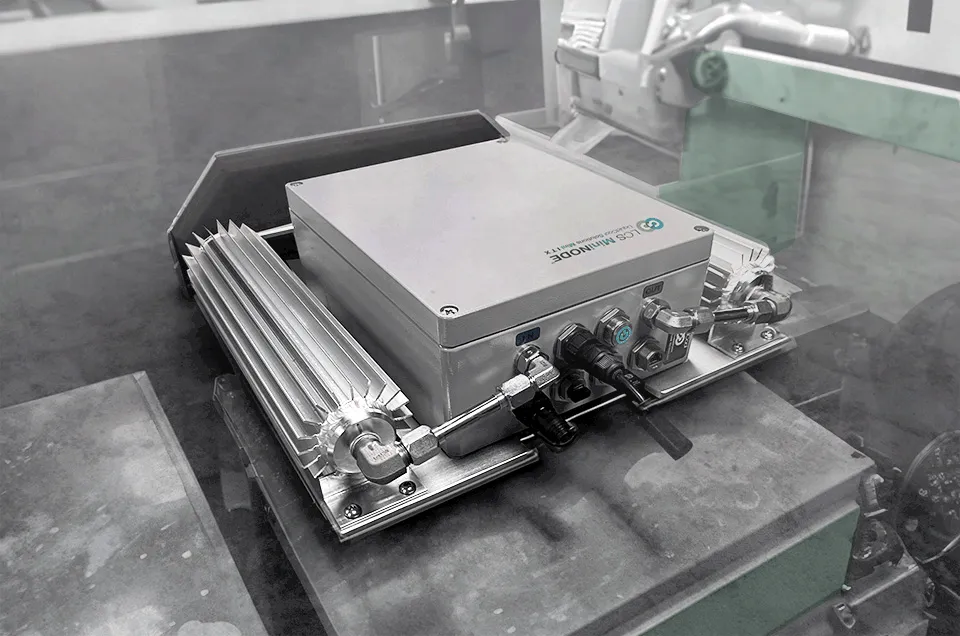
The MiniNODE is a compact, sealed industrial computer built around a Mini-ITX motherboard fully immersed in dielectric fluid. Its rugged enclosure carries an IP67 designation, isolating the electronics from dust, water, and corrosive air while liquid removes heat without fans.
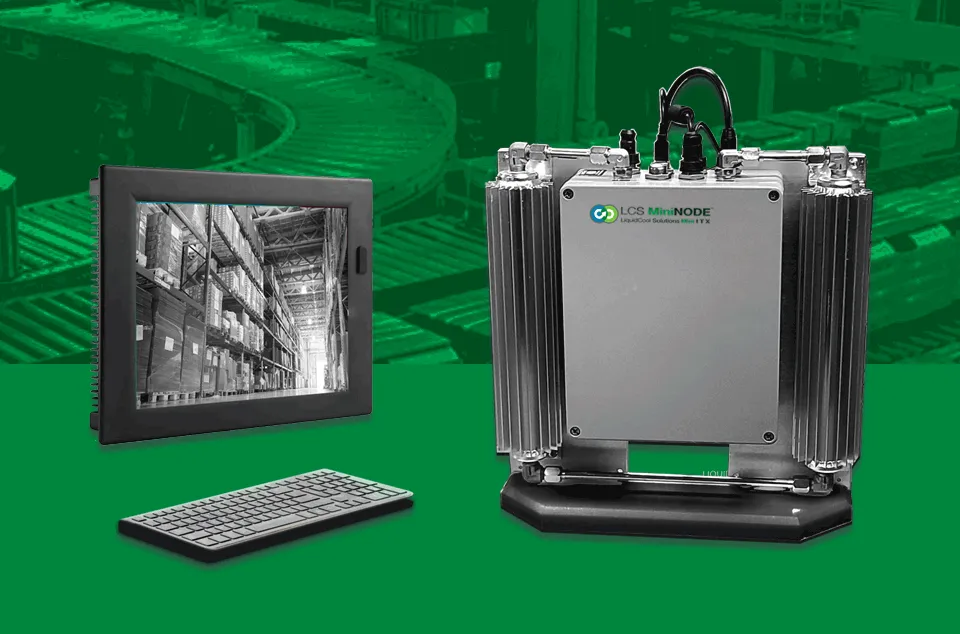
Factory floors, processing plants, and outdoor installations expose computers to dust, humidity, salt, and corrosive gases, the most common causes of electronic failure. Sealing an air-cooled PC limits its cooling; venting it lets contaminants in.
The MiniNODE avoids that trade-off. The electronics sit in a sealed enclosure, immersed in a dielectric fluid that carries heat to an external heat exchanger. LCS states that isolating the electronics, damping thermal cycling, and lowering operating temperatures reduces common causes of failure.
Best-fit applications
- Industrial control and IIoT
- Machine-side computing on manufacturing and process lines.
- Dusty, wet, or salty sites
- Mining, agriculture, food processing, marine, and coastal environments.
- Corrosive atmospheres
- Locations where airborne chemicals attack exposed electronics.
- Low-maintenance deployments
- Places where filters, fans, and air conditioning are impractical to service.
Key capabilities
What the MiniNODE delivers
- Sealed enclosure with IP67 designation
- Compatible with Mini-ITX motherboard standards
- Handles low- to high-power applications
- No fans, air conditioning, or water required
- Electronics protected from humidity, dust, oxidation, and corrosive gases
- Quiet, low-maintenance operation
How it works
Directed flow, then full immersion
- 1Using LCS's patented directed-flow technology, the coolest fluid is sent to the hottest component, the processor, first.
- 2The fluid then immerses the rest of the board, gathering heat from remaining electronics inside the sealed chassis.
- 3Warmed fluid passes to the attached heat exchanger (HEX), is cooled, and returns. The fluid stays sealed inside the system.
Technical specifications
LCS MiniNODE specifications
The hardware listed is the published configuration; current components should be confirmed with LCS.
| CPU |
|
|---|---|
| Memory |
|
| Storage |
|
| Graphics |
|
| LAN |
|
| OS support |
|
| Form factor |
|
|---|---|
| Power supply |
|
| Chassis |
Note: IP67 applies to the sealed enclosure. Confirm ratings for external connectors, cabling, and the power brick for your installation. |
| Dimensions with HEX (W × D × H) |
|
| Fluid |
|
| Operating temperature |
|
Warranty: 1 year parts and labor. Extended warranties are available. Contact LiquidCool Solutions for details.
Deployment & servicing
What to plan for
- Mounting
- Compact footprint (16 × 18 × 4.5 in with heat exchanger). Allow airflow around the heat exchanger for heat rejection.
- Power
- External 180 W / 19 VDC brick. The brick is outside the sealed enclosure, plan its location and protection accordingly.
- Environment
- Published operating range 0 °C – 45 °C. Contact LCS for sites outside that range.
- Configuration
- LCS is OEM and form-factor agnostic and can configure a system to your application.
Evidence & resources
Go deeper
- Research & field results: NREL evaluation and Grid Catalyst field test, with conditions and limitations.
- Benefits of immersion cooling: what each published figure means.
- TIDF vs. air, cold plate, and tanks
- Data Center & AI: ZPServer
- Edge Computing: Small-Scale Solution
FAQ
MiniNODE questions
Next step
Computing in a tough environment?
Tell us about your workload, site, and timeline. An LCS engineer will help you assess whether rack-based immersion fits your infrastructure.