
Data Center & AI
ZPServer: immersion-cooled rack servers for data centers and AI
What is the ZPServer?
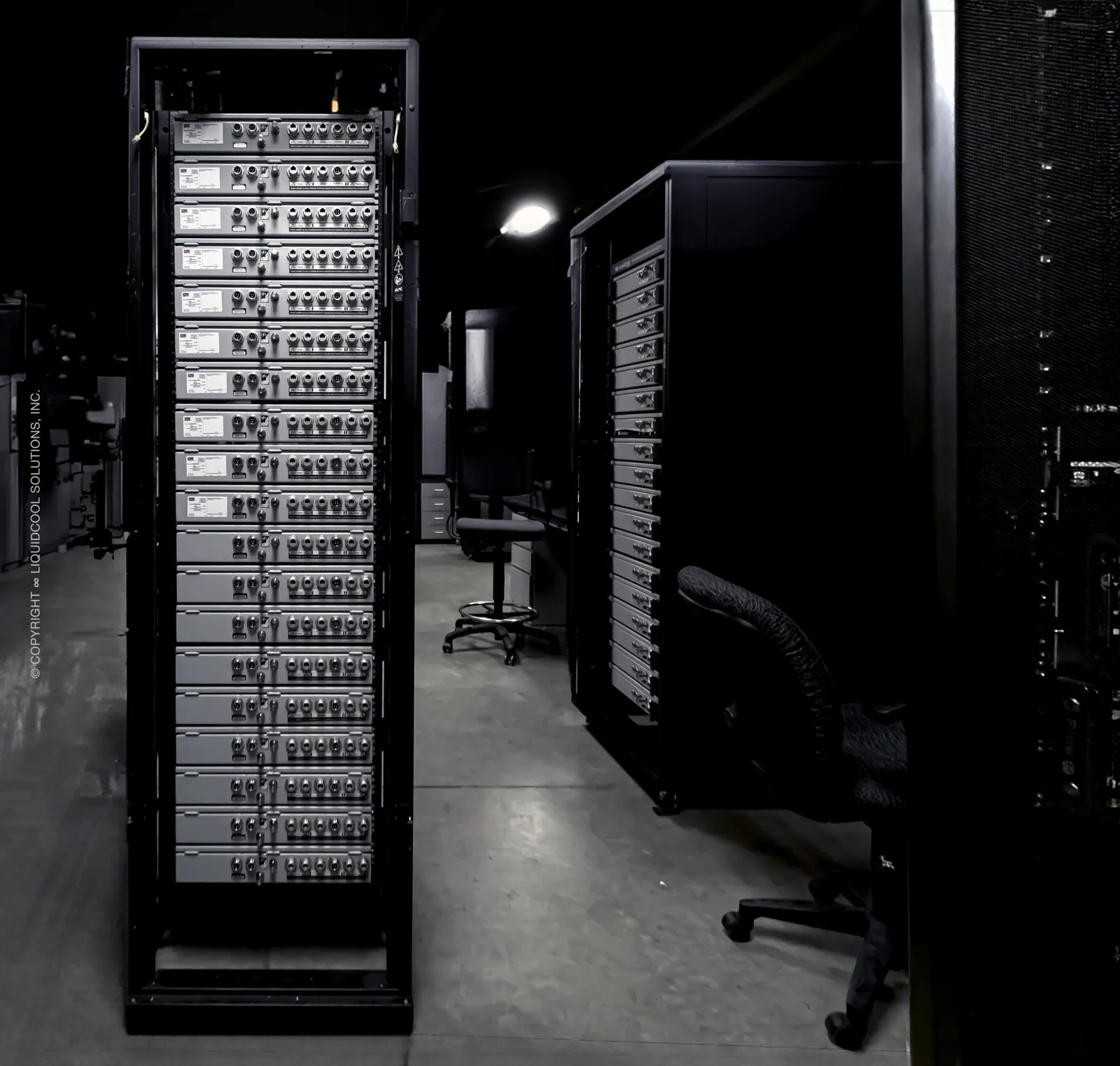
The ZPServer is a sealed, liquid-tight 2U server chassis that cools every component with single-phase dielectric fluid using Total Liquid Immersion with Directed Flow (TIDF). It slides into standard 19″ EIA or OCP racks and is configured to the customer's chosen processors and accelerators.
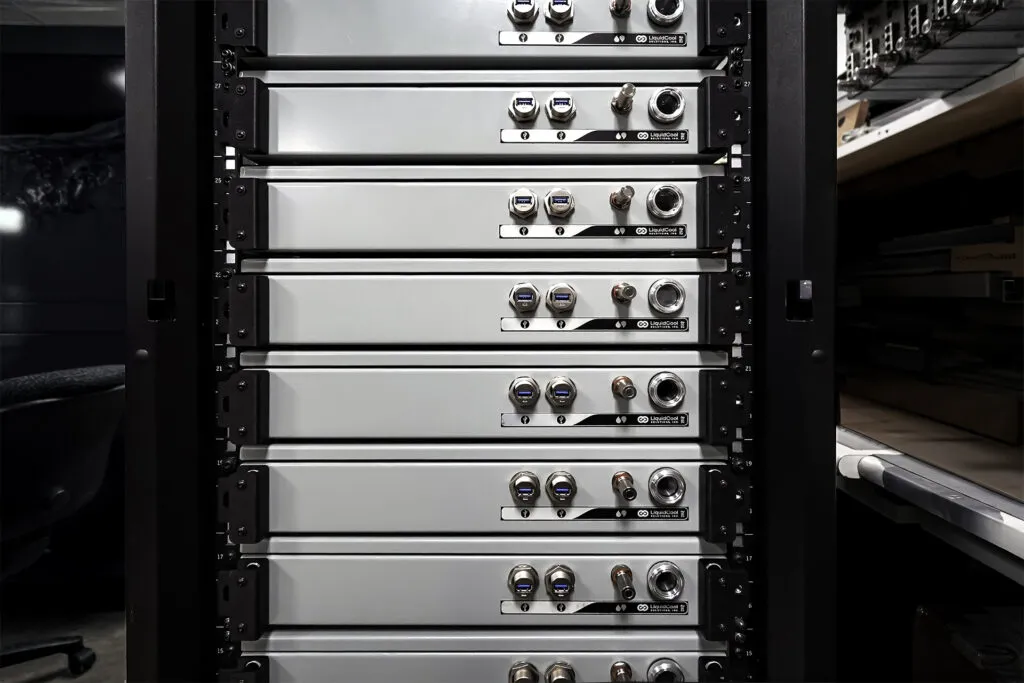
As AI training, inference, and high-performance computing (HPC) push more power into each server, conventional air cooling runs out of headroom. The ZPServer was designed for that problem: it removes heat with liquid while keeping the rack-based form factor operators already know.
The “ZP” stands for zero pressure, fluid circulates through the sealed chassis rather than being held at pressure. LCS publishes server power density of up to 4 kW per server (see Claims & evidence below for how this figure is used on this site).
Best-fit applications
- AI and GPU clusters
- Accelerator-heavy servers whose heat output strains air cooling.
- HPC and research computing
- Sustained high-utilisation workloads where throttling costs time.
- Brownfield data centers
- Facilities that want liquid cooling without replacing racks or building out tank rooms.
- Heat-recovery projects
- Sites that can use warm fluid or water for building or process heating.
Key capabilities
What the ZPServer delivers
- Fits standard 19″ EIA and OCP racks
- Configured to your platform, OEM brand and form-factor agnostic
- Fanless servers with quiet operation
- No air conditioning required for the servers
- No consumptive water use by the cooling system
- Sealed chassis protects electronics from contaminants
- Wide operating temperature range for flexible siting
- Serviced at the rack, like conventional servers
How it works
Directed flow, then full immersion
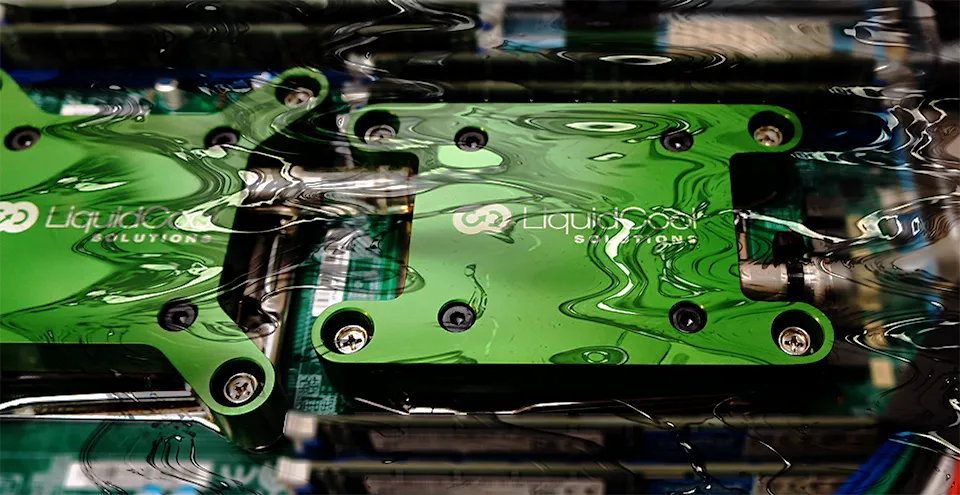
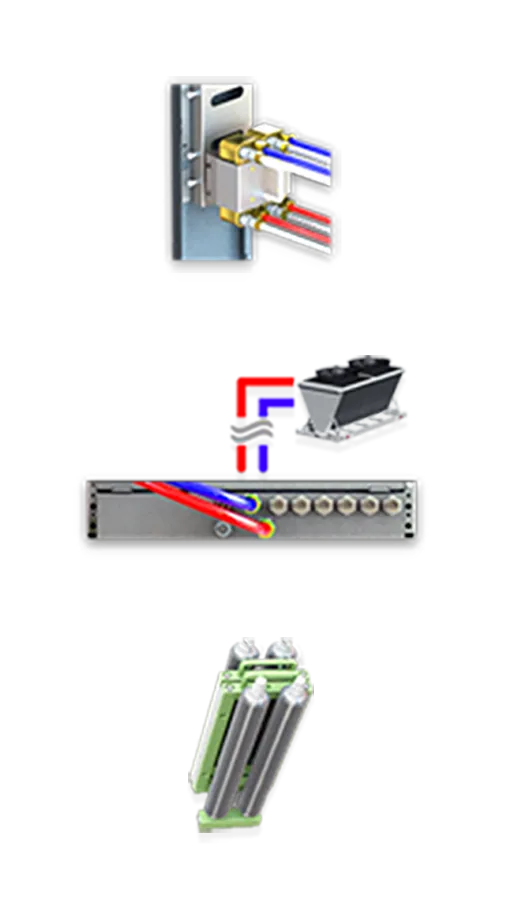
- 1Cool dielectric fluid enters the chassis and is directed first through engineered heatsinks on the hottest components, typically CPUs and GPUs.
- 2Leaving the heatsinks, the fluid floods the rest of the chassis, collecting heat from memory, storage, voltage regulators, and other electronics.
- 3Heated fluid exits through the rear connections to a heat exchanger, where its heat is rejected or captured, and the cooled fluid is returned.
Technical specifications
LCS ZPServer™ specifications
| Processors |
|
|---|---|
| Accelerators / GPUs |
|
| I/O |
|
| Power supply |
|
| Form factor |
|
|---|---|
| Chassis |
|
| Dimensions (W × D × H) |
|
| Fluid capacity |
|
| Wet weight |
|
| Cooling |
|
| Operating temperature |
|
| Liquid-to-liquid |
Note: Capture into the fluid loop is not the same as heat reused on site; reuse depends on the facility. |
|---|---|
| Liquid immersion / fan-assisted |
Note: Servers are fanless; this heat-rejection option itself uses fans. |
| Liquid-to-air (passive radiator) |
|
Warranty: 1 year parts and labor. Extended warranties are available. Contact LiquidCool Solutions for details.
Deployment & servicing
What to plan for
- Rack integration
- Chassis insert into existing EIA or OCP racks. They can be co-located with air-cooled equipment or packaged as a dedicated, fully populated rack.
- Facility connections
- Liquid-to-liquid configurations connect to facility water from above, in the same way as cold-plate infrastructure. LCS states facility water can be supplied at up to 45 °C.
- Servicing
- Individual servers are removed from the rack for maintenance; there is no tank to drain or lift components out of.
- Power
- External power shelf; facility power of 240/120 VAC is required. Final electrical design depends on configuration.
Evidence & resources
Go deeper
- Research & field results: NREL evaluation and Grid Catalyst field test, with conditions and limitations.
- Benefits of immersion cooling: what each published figure means.
- TIDF vs. air, cold plate, and tanks
- Edge Computing: Small-Scale Solution
- Harsh Environments: MiniNODE
FAQ
ZPServer questions
Next step
Planning a dense AI or HPC deployment?
Tell us about your workload, site, and timeline. An LCS engineer will help you assess whether rack-based immersion fits your infrastructure.