
Edge Computing
Small-Scale Solution: a self-contained, immersion-cooled server room for the edge
What is the Small-Scale Solution?
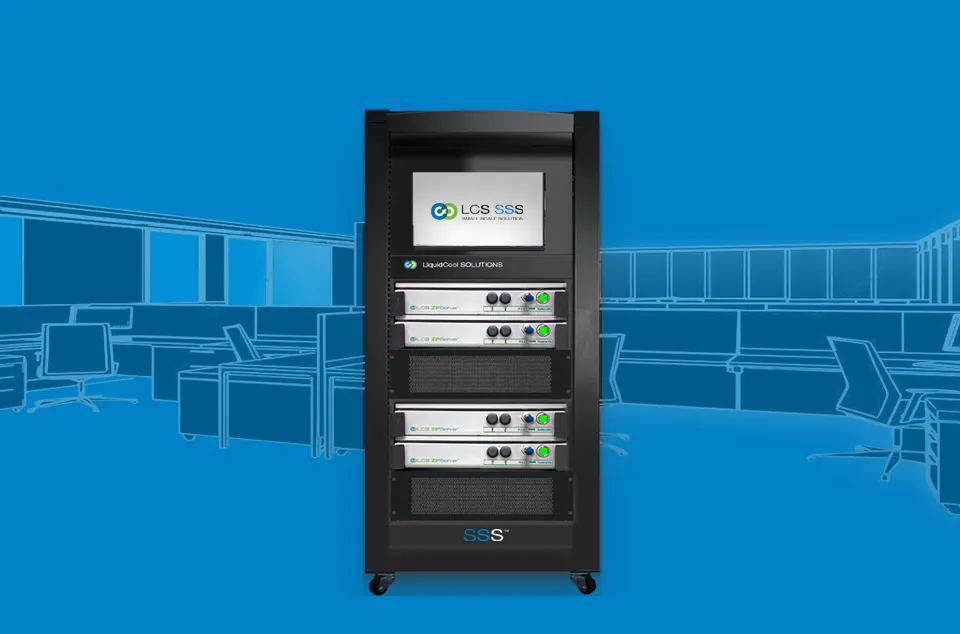
The Small-Scale Solution (SSS) is a 24U rack populated with four to six LCS ZPServers and self-contained heat exchangers. It is designed to run high-performance computing close to where data is created, needing power and a network connection rather than a purpose-built server room.
Sending every workload to a central data center or the cloud adds latency and bandwidth cost. Edge computing keeps processing near the data source, but edge sites rarely have air conditioning, clean air, or space for a server room.
The Small-Scale Solution addresses that by bringing its own cooling. ZPServers are configured to the application, installed in a 24U rack, and paired with self-contained heat exchangers. LCS states set-up time is under two hours.
Best-fit applications
- Industrial and utility sites
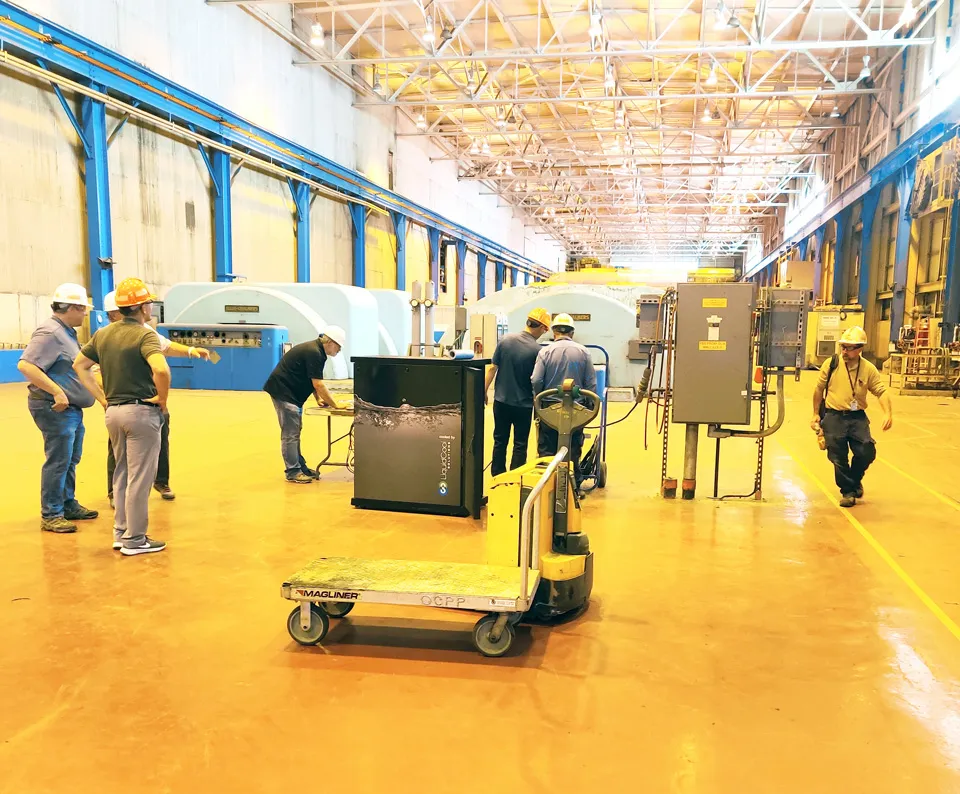
- Plants, turbine rooms, and substations without a conditioned IT room.
- Remote or temporary deployments
- Locations where a mobile, self-contained system is easier than a buildout.
- Latency-sensitive processing
- Workloads that need results near the data source.
- Pilots ahead of scale-out
- Teams evaluating immersion cooling before a full-rack deployment.
Key capabilities
What the Small-Scale Solution delivers
- 24U rack with four to six ZPServers
- Self-contained heat exchangers
- Self-monitoring capability
- Scalable to a full 42U rack
- Published cooling PUE <1.04
- Published noise <55 dBA
- No consumptive water use
How it works
Directed flow, then full immersion
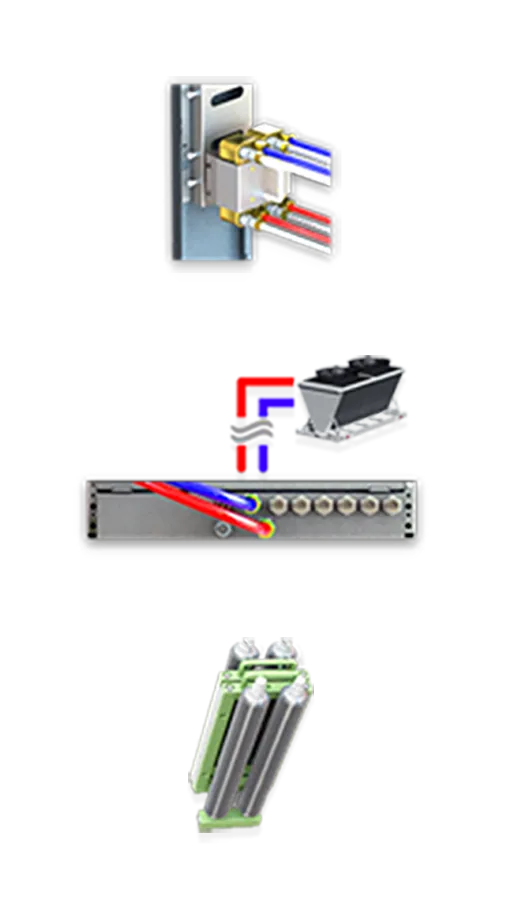
- 1Each ZPServer inside the SSS uses TIDF: the coolest fluid reaches the hottest components first, then immerses the remaining electronics.
- 2Heated fluid flows to heat exchangers integrated into the rack, rather than to a facility cooling plant.
- 3Cooled fluid returns to the servers, with system monitoring built in.
Technical specifications
LCS Small-Scale Solution (SSS) specifications
Current availability and configurations should be confirmed with LCS for your project.
| Rack |
|
|---|---|
| Servers |
|
| Power |
Note: Measurement basis (per server vs. system, typical vs. maximum) is pending confirmation. |
| Storage |
|
| Heat exchange |
|
| Monitoring |
|
| Cooling PUE |
|
| Noise |
|
| Processors |
|
|---|---|
| Accelerators / GPUs |
|
| I/O |
|
| Power supply |
|
| Form factor |
|
|---|---|
| Chassis |
|
| Dimensions (W × D × H) |
|
| Fluid capacity |
|
| Wet weight |
|
| Cooling |
|
| Operating temperature |
|
| Liquid-to-liquid |
Note: Capture into the fluid loop is not the same as heat reused on site; reuse depends on the facility. |
|---|---|
| Liquid immersion / fan-assisted |
Note: Servers are fanless; this heat-rejection option itself uses fans. |
| Liquid-to-air (passive radiator) |
|
Warranty: 1 year parts and labor. Extended warranties are available. Contact LiquidCool Solutions for details.
Deployment & servicing
What to plan for
- Site requirements
- Facility power (480/240/120 VAC depending on configuration) and a network connection. No raised floor, air conditioning, or facility water is required for self-contained heat-exchange configurations.
- Set-up
- LCS states the system can be set up in under two hours once on site.
- Scaling
- Start with four to six servers in 24U and scale toward a full 42U rack.
- Servicing
- Servers are removed from the rack individually for maintenance.
Evidence & resources
Go deeper
- Research & field results: NREL evaluation and Grid Catalyst field test, with conditions and limitations.
- Benefits of immersion cooling: what each published figure means.
- TIDF vs. air, cold plate, and tanks
- Data Center & AI: ZPServer
- Harsh Environments: MiniNODE
FAQ
Small-Scale Solution questions
Next step
Need compute where there is no data center?
Tell us about your workload, site, and timeline. An LCS engineer will help you assess whether rack-based immersion fits your infrastructure.